Tribela — social media designed for presence, not performance

Childhood isalready online.
It is time to build social media around the people growing up inside it.
Safety
by design
of 32
Childhood has moved inside adult platforms.
Young people are not occasional visitors to the online world. They are growing up inside it. But the platforms where they build friendships, explore identity and seek belonging were engineered around adult attention, advertising and growth — not child development.
of online 8–9-year-olds visited a social-media or video-sharing service (28-day passive measurement)
of 13–17-year-olds reported a profile on at least one social-media, video-sharing, messaging or livestreaming service
of children under 13 already had a profile specifically on a social-media app or site
We would never design a school or playground this way. Why have we accepted it online?
Source: Ofcom Children's Passive Online Measurement, 2026 · Ofcom Children and Parents: Media Use and Attitudes, 2026
of 32
The consequences are no longer theoretical.
This is not only a failure of individual behaviour or parental supervision. Recommendation systems and personalised feeds can place harmful material directly in front of young people who never went looking for it.
of 11–17-year-olds met potentially harmful content in just four weeks
saw content encouraging dangerous stunts or challenges
saw content relating to eating, drinking or inhaling harmful substances
reported exposure to violent content
of those who recalled harmful content said it happened while scrolling their feed
encountered the harmful content because they had searched for it
Explicit content also reaches children early: in a 2025 nationally representative survey of 16–21-year-olds in England, roughly one in five respondents recalled having seen online pornography by age 11 (retrospective self-report).
Source: Ofcom Children's Online Experiences, 2026 · Children's Commissioner for England, 2025
of 32
The risk extends beyond content.
Sextortion can begin with a follow, a friend request, a message or an apparently ordinary interaction. Social platforms can create direct pathways from children to people who intend to exploit them.
reports of financial sextortion received by NCMEC in 2023
the 10,731 reports received in 2022
- 01Who can discover a child
- 02Who can contact them
- 03Who can view their content
- 04Whether strangers are recommended to their friends
- 05How quickly suspicious communication is identified
Child safety cannot depend exclusively on detecting an offender after contact has already occurred. The product must reduce the opportunity for that contact in the first place.
Source: NCMEC sextortion data
of 32
One connection can become a pathway.
One child accepts a stranger. A conventional platform then recommends that account to other children because they share a mutual connection. A single point of access becomes a pathway into an entire peer group.
The danger did not begin because a child went looking for a predator. It began with a product designed to expand connections.
Suggested contacts, public profiles, visible friend networks and unrestricted discovery are not neutral features when children use them. Tribela does not build connection this way.
of 32
This is happening during a youth mental-health crisis.
These figures describe the wider crisis facing young people. They do not mean social media caused every case. But platforms now occupy a substantial part of young people's social and emotional lives.
of US high-school students experienced persistent sadness or hopelessness
of girls experienced persistent sadness or hopelessness
seriously considered attempting suicide
attempted suicide
When products introduce compulsive use, social comparison, popularity pressure, harmful recommendations and unwanted contact into that environment, their design becomes a serious public-health consideration.
Source: CDC Youth Risk Behavior Survey, 2023 · US Surgeon General's advisory
of 32
The problem is structural.
Adding another warning, parental setting or time limit does not change the underlying architecture. The architecture itself must change.
of 32
Regulators and courts are examining the design.
European Commission, 2026
Preliminarily identified infinite scroll, autoplay, push notifications and highly personalised recommendations as elements of TikTok's potentially addictive design.
New Mexico, March 2026
A jury found Meta liable for misleading consumers about platform safety and endangering children — a $375 million verdict.
California bellwether, March 2026
The first bellwether trial among roughly 2,000 pending cases found Meta and YouTube negligent in product design, awarding $6 million for a young person's mental-health injuries.
These verdicts remain subject to post-trial proceedings and appeal. But the direction is important: the debate is no longer only about what users post. It is about what platforms are designed to do.
Source: European Commission preliminary findings · New Mexico DOJ · Reuters
of 32
Why we built Tribela.
If design choices create or amplify harm, can we reverse those design choices? We researched the mechanisms repeatedly associated with social-media harm — compulsive feeds, behavioural profiling, public performance, uncontrolled discovery, unwanted contact, delayed moderation, excessive data collection.
- 01Agency instead of manipulation
- 02Connection instead of performance
- 03Privacy instead of exposure
- 04Choice instead of behavioural prediction
- 05Prevention instead of reaction
- 06Data minimisation instead of surveillance
of 32
We reverse-engineered the platform around the harms.
Tribela cannot remove every risk associated with human interaction. But we have designed out the mechanisms most consistently identified as creating or amplifying those risks.
of 32
What Tribela is.
A complete social experience designed around agency, creativity and wellbeing.
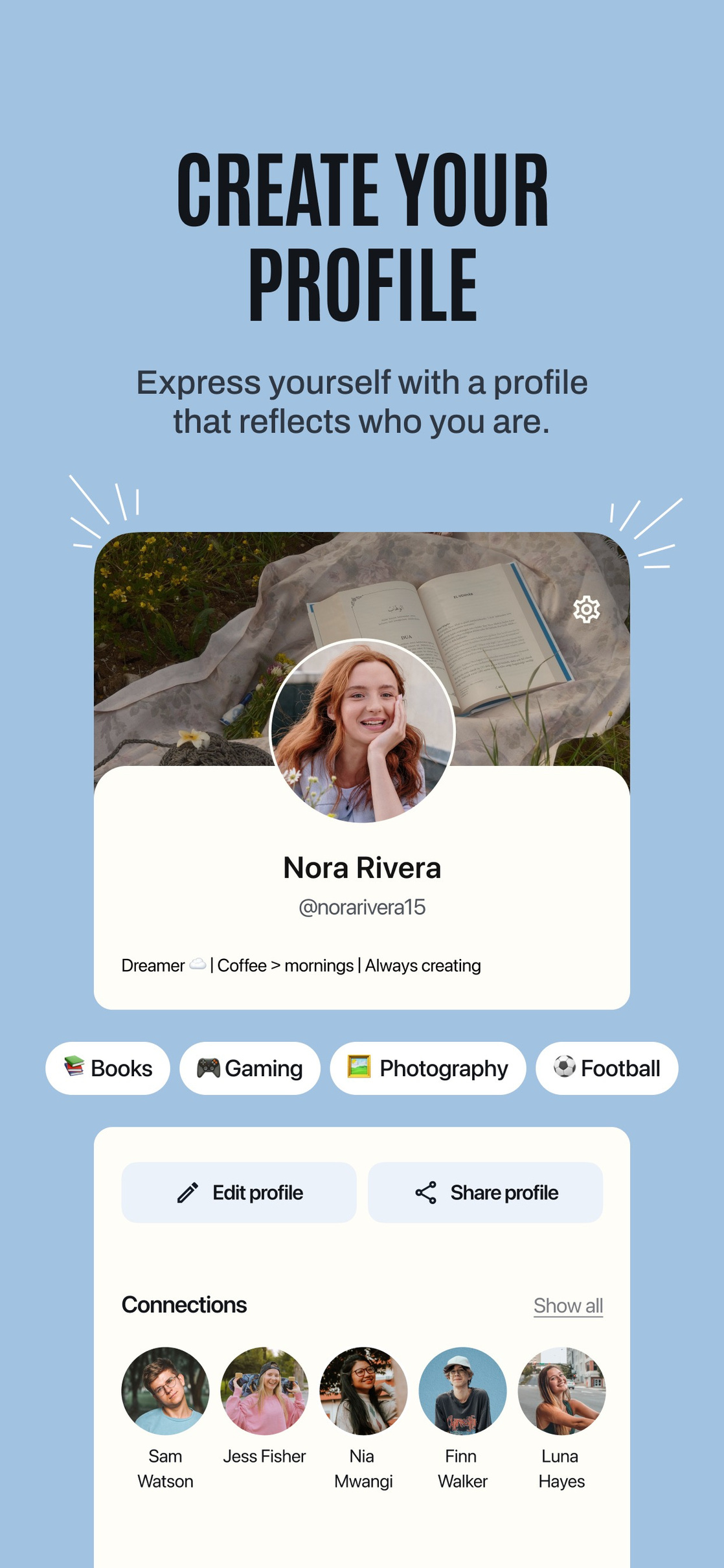
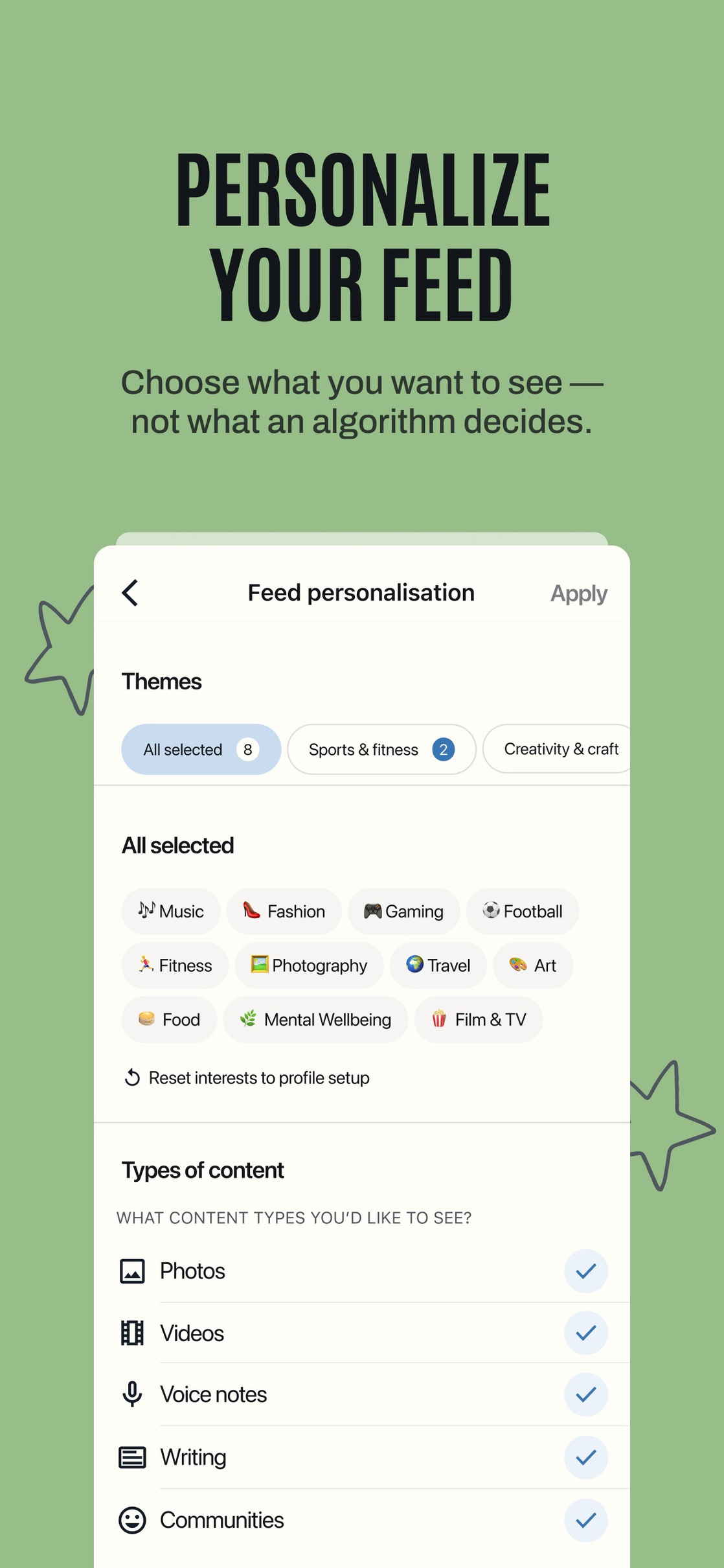
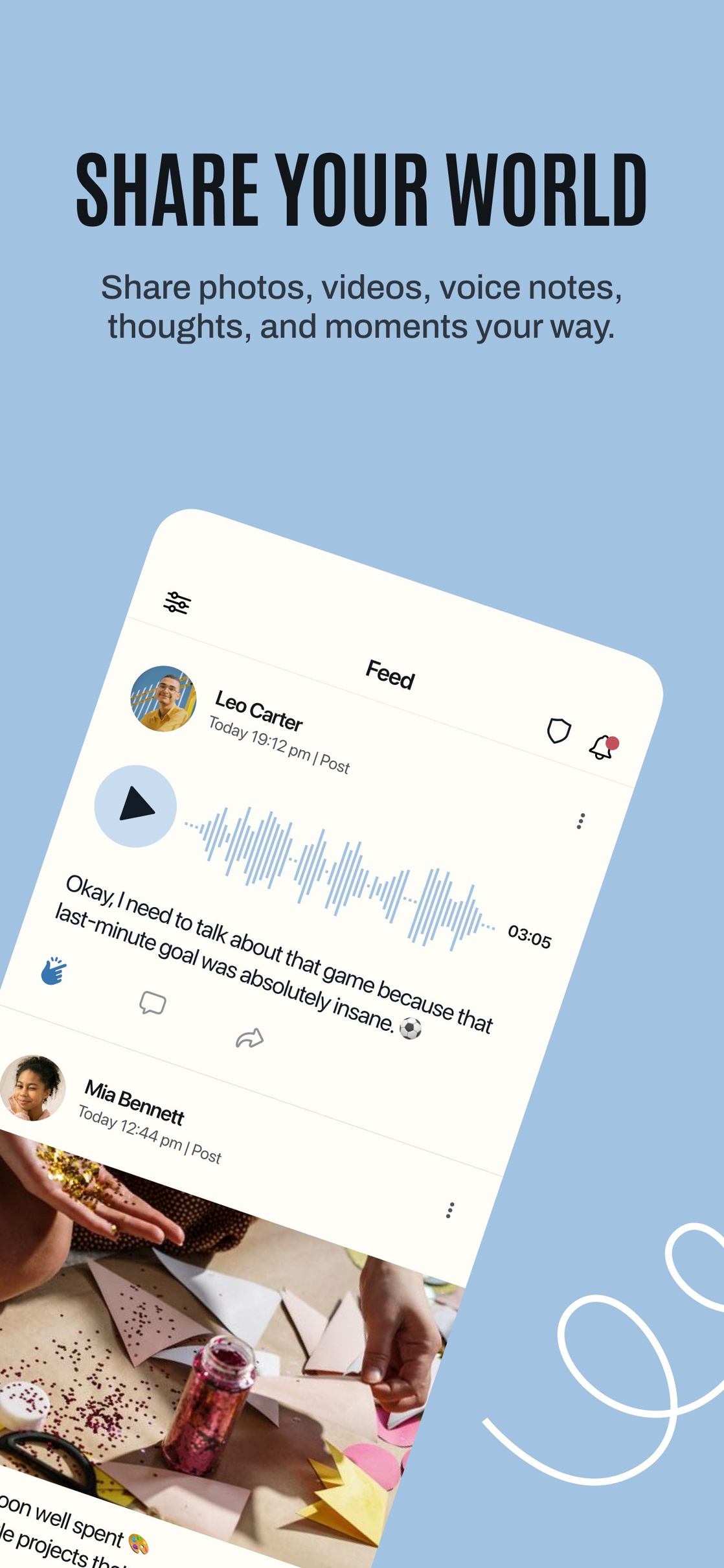
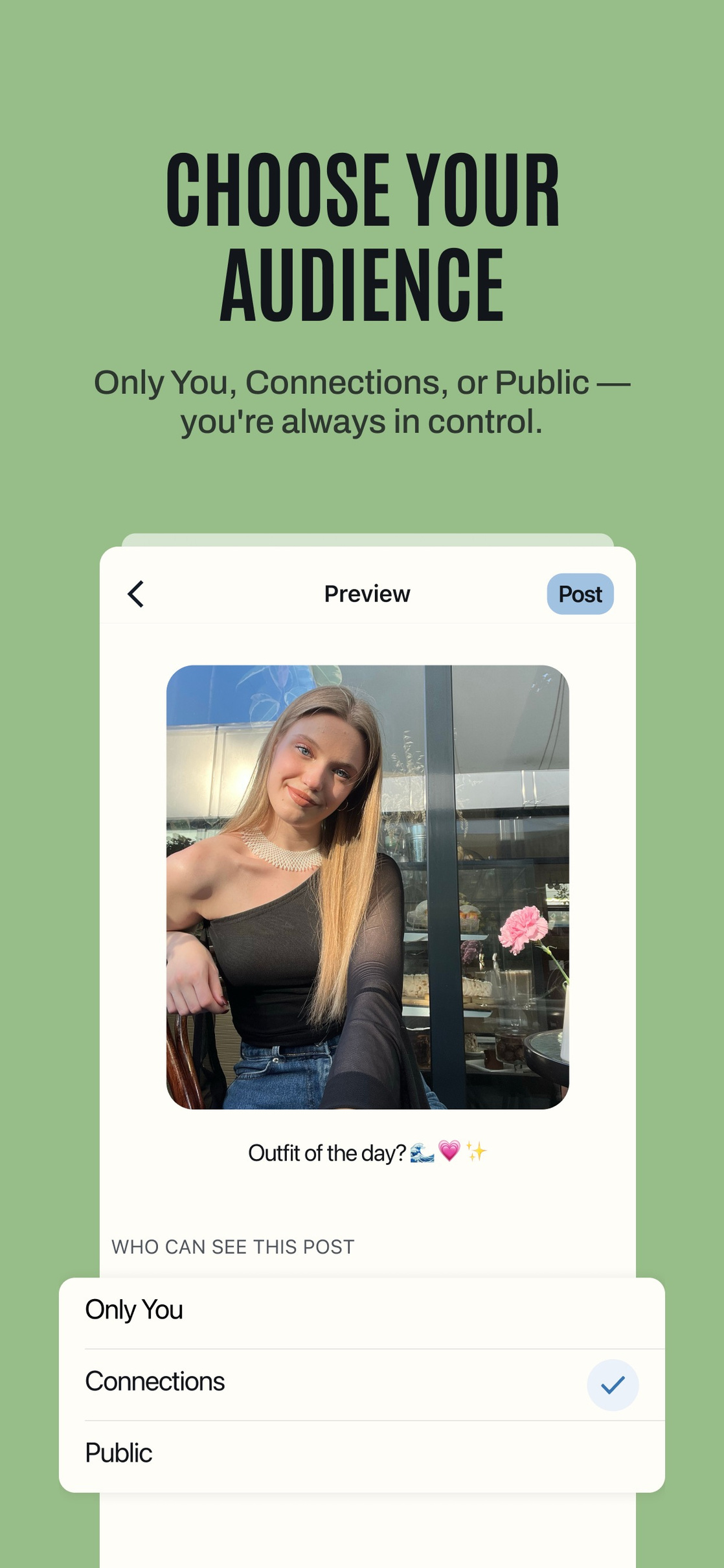
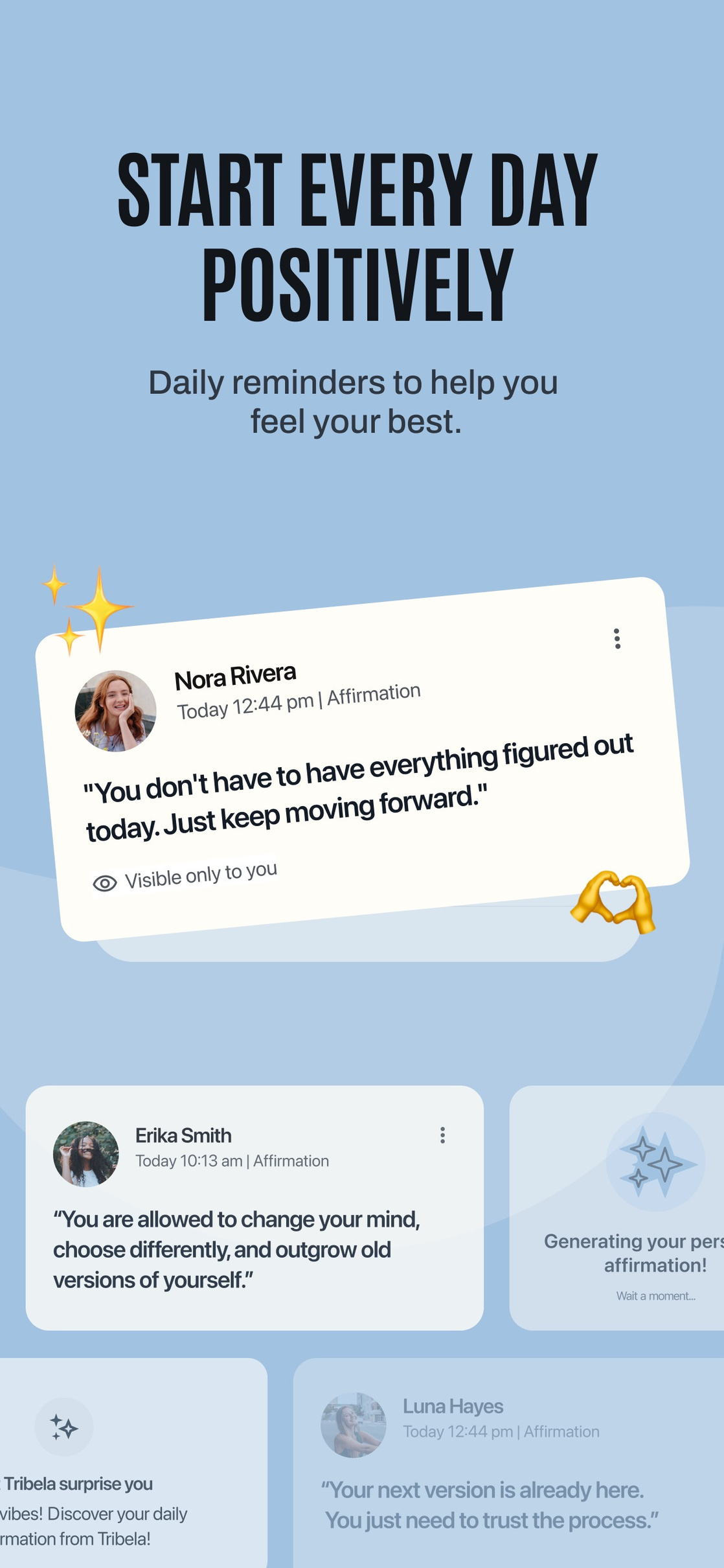
Tribela preserves what people value about social media — friendship, creativity, communication, identity, discovery, belonging. It changes the systems operating underneath.
of 32
A feed designed to end.
Most platforms ask: what will keep this person watching? Tribela asks: what has this person chosen to see?
- 01Clear stopping points
- 02No autoplay
- 03Space placed intentionally between content
- 04Varied formats that interrupt repetitive consumption
- 05Users can reach the end of what is available
The objective is not to maximise time spent. The product does not treat a young person's inability to stop as a measure of success.
of 32
A control panel, not a behavioural profile.
People should understand and control why they see something. Tribela provides a control panel through which users choose what they want to see and discover.
- 01People the user has chosen to connect with
- 02Topics and interests they select
- 03Content categories they actively choose
- 04Chronology
- 05Relevance to their stated preferences
Tribela does not need to secretly infer a young person's vulnerabilities to keep them engaged. The system responds to conscious choices rather than manipulating behaviour through invisible prediction.
Source: European Commission guidelines on protecting minors
of 32
Connection without public performance.
Public likes, views and follower counts make social approval measurable. Research shows adolescents are more likely to endorse images displaying high numbers of likes — including images depicting risky behaviour — and that visible peer approval engages neural systems associated with reward.
of 8–17-year-olds using social-media, messaging or calling apps feel pressure to be popular at least sometimes
feel that pressure all or most of the time
- 01Reactions are private
- 02Public like totals are not displayed
- 03A “Snap” communicates support without creating a public score
- 04Connection is not converted into a measure of status
- 05Young people are not ranked by public popularity
Source: Ofcom Children and Parents: Media Use and Attitudes, 2026 · Sherman et al., Psychological Science, 2016
of 32
Private by default for under-16s.
Young people should not have to find the correct settings to become safe.
- 01Accounts begin private by default
- 02The audience for each post is chosen deliberately
- 03Content is not automatically exposed to the widest possible audience
- 04Connection systems limit access by strangers
- 05Messaging is subject to age-aware protections
- 06No conventional “people you may know” mechanism
Privacy is not hidden inside a menu. Privacy is the starting condition of the account.
of 32
Age assurance supports the protections.
Tribela is testing age-assurance technology with K-ID as part of its work in the UK and Australia. It is not treated as a complete child-safety solution on its own.
- 01Proportionate age assurance
- 02Privacy-preserving implementation
- 03Private-by-default accounts for under-16s
- 04Age-appropriate contact and content controls
- 05Testing and continuous review
- 06Routes for correction and appeal
The objective is enough confidence about age to apply the appropriate protections — without unnecessarily collecting identity data.
of 32
Safety before exposure.
Removing harmful content later does not undo a child's exposure to it. Tribela has developed a proprietary AI moderation system around the specific ways harm appears in online communication — not a keyword filter or an off-the-shelf product.
- 01Text
- 02Images
- 03Video
- 04Voice
- 05The context created by those elements together
Public content is assessed before publication. Private messages are assessed individually before delivery, using only the information required for the safety decision.
of 32
AI and human judgement work together.
Automated systems provide speed and scale, but language, intent and context can be complex. Tribela combines proprietary AI with human moderation, escalation and appeal.
- 01Sexual and exploitative content
- 02Grooming and coercive language
- 03Threats and serious violence
- 04Self-harm and suicide-related content
- 05Bullying and harassment
- 06Hate and discriminatory abuse
- 07Dangerous challenges
- 08Age-inappropriate explicit material
Safety decisions must be explainable, contestable and continuously tested.
of 32
We do not train on children's content.
Tribela does not use posts, private messages, images, videos or voice recordings shared on the platform to train its moderation models. Research and development use external datasets selected for relevant categories of harm.
- 01Establish and operate a basic account
- 02Deliver the service
- 03Apply age-appropriate protections
- 04Maintain security
- 05Meet proportionate safeguarding and legal responsibilities
The models do not silently self-learn from children's activity. The platform is not built around pervasive tracking or behavioural advertising profiles.
of 32
Privacy and safety are designed together.
Protecting a child should not require surveilling them.
- 01Decisions based on the content needed for the safety assessment
- 02Public posts assessed as complete multimodal posts
- 03Private messages assessed at the individual message level
- 04Moderation does not require a behavioural profile
- 05User content is not retained as AI training material
- 06Access to flagged content is controlled and limited
- 07Human review when greater judgement is required
Developed through engagement with the UK Information Commissioner's Office Regulatory Sandbox, to demonstrate that proactive child safety and meaningful privacy can be engineered together.
of 32
Designed with young people.
middle-school students in Canada took part in early product research
said they would try a social platform built differently
- 01Greater control over the feed
- 02Private rather than public reactions
- 03Intentional audience selection
- 04Different forms of creativity and expression
- 05An experience that still feels social — not clinical or restrictive
This is product-development research, not evidence of health outcomes. The next stage is independent evaluation of the experience and its effects.
of 32
Written by the generation we're building for.
“One of the first social media apps that isn't accepting the status quo of engagement metrics — it's redefining what metrics could look like if they prioritised user wellbeing and safety.”
“Tribela seamlessly blends all the elements of mainstream social media that I love with a responsible and truly user-centric design. I can see it replacing toxic online platforms.”
“Scrolling Tribela felt like a breath of fresh air — free of all the noise and anxiety I felt when using other platforms.”
Early beta testers and young users, in their own words.
of 32
This is not only an idea. Tribela is live.
users on the live iOS application
people registered for Android access
- 01UK, USA & Canada — primary markets
- 02Live iOS application available internationally
- 03Personalised, connection-led feeds
- 04Multimedia and long-form publishing
- 05Audience selection on every post
- 06Interest-led discovery
- 07Private reactions without public totals
- 08One-to-one messaging and daily affirmations
- 09Private-by-default accounts for under-16s
- 10Proprietary pre-publication moderation
- 11Human review, escalation and age-assurance testing
We have built the foundation. The next stage is structured growth, evaluation and partnership.
of 32
Research, regulatory engagement and support.
- 01UK ICO Regulatory Sandbox participation
- 02Age-assurance testing in the UK and Australia
- 03Direct research with more than 300 students
- 04A Youth Council representing young people's perspectives
- 05OUI Incubator participation
- 06ImpactU support
- 07Oxford Innovation support
- 08Angel investment and founder funding
- 09Engagement with educators, policymakers and child-safety stakeholders
These relationships are not government or regulatory endorsement. They demonstrate that Tribela is actively testing its assumptions and engaging with scrutiny.
of 32
A shared opportunity.
Governments and regulators
Support responsible pilots, regulatory learning, public-interest research and safety-by-design policy.
Schools and educators
Help young people participate in co-design and independently evaluated digital-wellbeing programmes.
Researchers and child-safety organisations
Test our assumptions, challenge the system and help establish meaningful outcome measures.
Parents
Help us understand what families need to trust a social platform, and participate in responsible testing.
Purpose-led brands
Support creativity, education and connection without behavioural profiling or attention extraction.
of 32
What partnership could look like.
- 01School or community pilots
- 02Independent safety and wellbeing evaluation
- 03Youth co-design programmes
- 04Safeguarding and governance review
- 05Age-assurance testing
- 06Digital-literacy initiatives
- 07Creative challenges and youth storytelling
- 08Research into healthy online connection
- 09Support for access across different communities
- 10Responsible brand-funded experiences
For brands, the opportunity is not advertising to children. It is demonstrating that creativity, play, storytelling and connection can thrive without surveillance, public performance or compulsive engagement.
of 32
Young people should help shape the technology they will inherit.
- 01Explore how social-platform design affects behaviour
- 02Identify the features they want in their online spaces
- 03Participate in age-appropriate co-design
- 04Test new forms of digital interaction
- 05Learn about privacy, algorithms and online safety
- 06Contribute to independent research
- 07Develop leadership and digital citizenship
Schools and families receive clear information about consent, data collection, safeguarding, escalation and the purpose of the programme before participation.
of 32
Five questions every parent should be able to answer.
- 01Who can find my child?
- 02Who can contact them?
- 03Who can see what they share?
- 04What happens when harmful content is detected?
- 05What is the platform learning about them?
Under-16 accounts begin private
Audiences are selected deliberately.
Connections are not expanded through stranger recommendations
Discovery is intentional.
Harmful content is assessed before exposure where possible
Not only removed afterwards.
Platform content is not used to train the moderation system
Behavioural advertising profiles are not the foundation of the product.
Parents should not need to become technology experts to understand how a platform protects their child.
of 32
An opportunity to study a different model.
Governments are being asked to regulate platforms whose architecture was established long before today's child-safety expectations.
- 01Safety integrated into product architecture
- 02Privacy-preserving age assurance
- 03Explicit rather than behavioural content signals
- 04Protection through defaults
- 05Data minimisation
- 06Pre-publication intervention
- 07Youth participation in platform development
- 08Independent evaluation of design choices
The objective is not to ask government to declare Tribela “safe.” It is to invite government to help establish what responsible social-platform design should require.
of 32
Why I am building this.
“I could not accept that this was simply “how social media works.” I spent more than 20 years creating media and understanding how stories capture attention. I am also a mother. After seeing the consequences that online social systems can have in a young person's real life, my family stepped away from social media. But leaving the platforms did not solve the wider problem — young people still need friendship, creativity, expression, discovery and belonging online. So we did not build another campaign telling children to use social media less. We built something different.”
Natalie Boll — Founder, Tribela
of 32
Social media does not have to depend on this.
- 01Infinite consumption
- 02Behavioural manipulation
- 03Public popularity contests
- 04Exposure by default
- 05Uncontrolled stranger discovery
- 06Extensive data extraction
- 07Moderation only after harm
- 08Training AI on young people's content
We can preserve friendship, creativity, communication and belonging without rebuilding the systems that produced the present crisis.
We are not asking young people to become less social. We are building social technology that takes their development seriously.
of 32
We built the alternative.
We can continue asking young people to protect themselves inside systems designed to capture their attention, expose their lives and measure their popularity. Or we can build the environment differently.
Tribela is demonstrating that social media can be designed around agency, privacy, safety, creativity and genuine connection from the beginning.
Now we are looking for the partners who will help prove it, strengthen it and bring it to young people.